



.png)


MHADA Launches Statewide Tree Plantation, Targets One Lakh Trees
Sanjeev Jaiswal Inaugurates Statewide Green Initiative in Bandra as MHADA Expands Urban Forests, Geo-Tagging, and Biodiversity Conservation Across Maharashtra.
The Maharashtra Housing and Area Development Authority (MHADA) has launched an ambitious statewide tree plantation and conservation campaign with a goal of planting one lakh trees during this year's monsoon season. The initiative aims to strengthen environmental sustainability, improve urban biodiversity, and enhance climate resilience across Maharashtra.
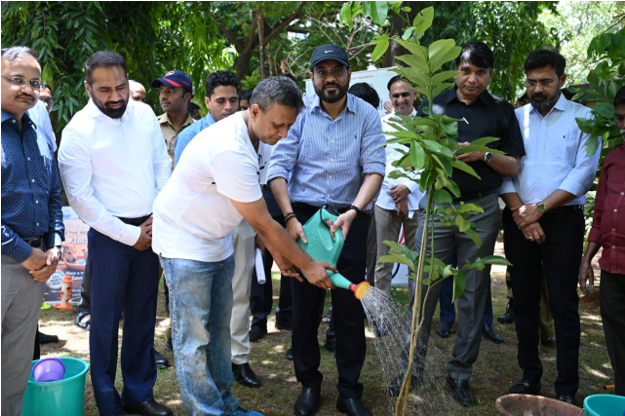
The campaign was officially inaugurated at the MHADA headquarters in Bandra (East), Mumbai, where Vice President and CEO Mr. Sanjeev Jaiswal, IAS, planted Bahava trees to mark the beginning of the statewide environmental initiative. The drive forms part of MHADA's broader commitment to creating greener urban spaces while addressing the growing challenges of climate change, rising temperatures, pollution, and rapid urbanization.
The large-scale plantation campaign was launched during Van Mahotsav Week, an annual tree plantation festival celebrated across India to promote environmental awareness and ecological conservation.
To kick-start the initiative, 30 mature Bahava trees were planted at the MHADA headquarters in collaboration with the Panchmahabhute Foundation. Alongside the plantation drive, MHADA also introduced its 'Jal Seva' initiative, installing water pots and feeding bowls for birds and small animals at multiple locations around its headquarters to support urban wildlife during the summer and monsoon months.
The initiative reflects MHADA's growing focus on integrating biodiversity conservation with urban infrastructure development.
Speaking during the launch event, MHADA Vice President and CEO Mr. Sanjeev Jaiswal, IAS, highlighted the long-term environmental benefits of planting mature Bahava trees.
According to him, the three-and-a-half-year-old trees will gradually create a natural ecosystem capable of attracting birds, butterflies, bees, and other important pollinators. He added that the plantation is expected to absorb more than 3,000 kilograms of carbon dioxide annually while generating nearly 15,000 kilograms of oxygen each year, significantly improving the environmental quality around the headquarters.
Mr. Sanjeev Jaiswal, IAS, expressed confidence that the MHADA headquarters campus will evolve into the 'Green Lungs' of Bandra, offering cleaner air, increased biodiversity, and improved ecological balance within the densely populated urban area.
Following the directions of Mr. Sanjeev Jaiswal, IAS, every MHADA regional board has begun implementing the plantation campaign across Maharashtra.
Current plantation progress includes approximately 10,000 trees by the Nashik Board, 4,000 trees by the Konkan Board, nearly 3,000 trees across Pune, Solapur, and Kolhapur by the Pune Board, around 1,000 trees by the Nagpur Board in Vaddhamana and MHADA City developments, an initial 500 trees by the Chhatrapati Sambhajinagar Board with plans for over 10,000 more, and a target of 4,000 trees by the Mumbai Board, of which 500 have already been planted.
The statewide plantation campaign will continue throughout the monsoon season as MHADA works toward achieving its ambitious target of planting one lakh trees.
A key feature of MHADA's environmental campaign is its emphasis on planting native tree species naturally suited to Maharashtra's climate.
Rather than relying on small saplings, MHADA is planting healthy trees that are generally five to six feet tall and between two and three years old, increasing survival rates and ensuring quicker environmental benefits.
The campaign also prioritizes fruit-bearing and indigenous species that support local biodiversity by providing food and shelter for birds, insects, and wildlife while improving long-term ecological balance. This approach aligns with broader goals of carbon sequestration, cleaner air, sustainable urban planning, and biodiversity restoration.
MHADA is also planning to develop Miyawaki urban forests on land parcels unsuitable for construction across the Mumbai Metropolitan Region (MMR). The Miyawaki technique enables dense forests to grow rapidly within small urban spaces by planting multiple native species close together. These forests help increase green cover, improve air quality, reduce heat island effects, absorb carbon emissions, and create habitats for wildlife.
The initiative is expected to strengthen Maharashtra's urban environmental infrastructure while making better use of vacant public land.
To improve transparency and ensure long-term success, MHADA will geo-tag every tree planted under this year's campaign. Digital tracking will allow officials to monitor tree growth, survival rates, and maintenance throughout the coming years.
MHADA is also considering partnerships with resident welfare associations, housing societies, non-governmental organizations (NGOs), and local community groups to ensure continued care and maintenance of the plantations. This technology-driven approach is expected to improve accountability while increasing public participation in urban environmental conservation.
Join Our Public Insights List
Be the first to know about key reforms, success stories, and updates from IAS Sanjeev Jaiswal’s administrative journey.