





Achievements
Achievements and Contributions
Sanjeev Jaiswal’s career is marked by a series of impactful initiatives and programs, reflecting his visionary leadership and commitment to sustainable development, public welfare, and urban transformation. Below is a comprehensive overview of his key achievements and contributions, categorized by areas of focus.
Disaster Management and Relief
Flood Relief and Rehabilitation (2005)
He began his administrative career as a Sub-Divisional Magistrate (SDM), gaining firsthand experience in grassroots governance while addressing critical challenges such as water scarcity, tribal rehabilitation, and agricultural inefficiencies. As SDM of Taloda, District Nandurbar, he played a pivotal role in rehabilitating Project-Affected Persons (PAPs) displaced by the Sardar Sarovar Project and even had to face the agitators of the Narmada Bachao Andolan. His tenure required him to navigate complex socio-political dynamics while ensuring the successful execution of rehabilitation efforts.
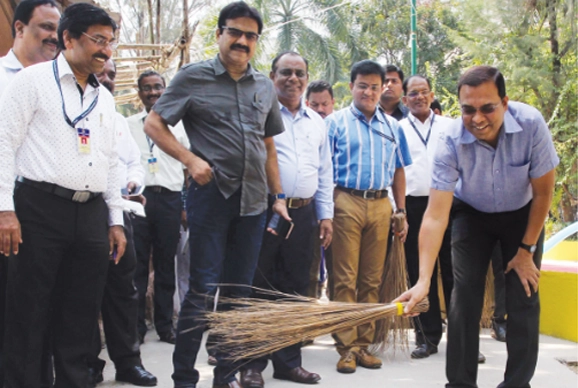
During the 2005 floods in Chandrapur, he personally navigated floodwaters in rubber boats to deliver medical aid, food, and relocation support to affected communities. He also established temporary rehabilitation centers equipped with essential amenities to ensure displaced individuals had access to basic necessities. These efforts highlighted his human-centered approach to governance, emphasizing proactive crisis management and direct community engagement during emergencies.
Disaster Management and Relief
Conducting Elections in Naxalite Areas (2004)
In the Naxalite-affected regions of Chandrapur and Gadchiroli, he successfully conducted elections under high-security risks, ensuring the democratic process remained intact. His efforts focused on the safe deployment of polling teams to inaccessible and high-risk areas while also maintaining law and order throughout the electoral process. Despite the challenges, the elections were conducted peacefully, reinforcing democratic integrity in one of the most difficult operational environments.
Urban Infrastructure Development
Municipal Commissioner of Thane (2015–2020)
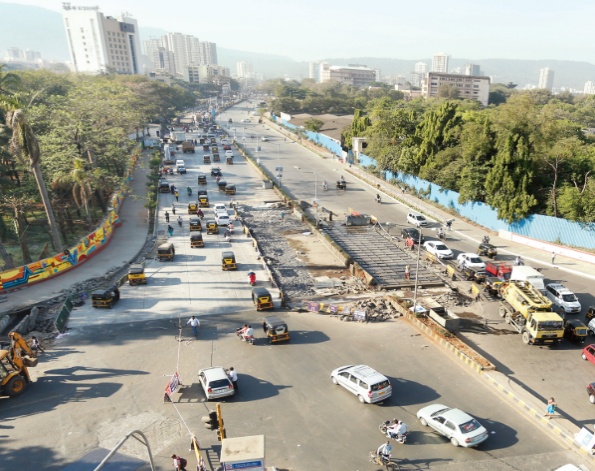
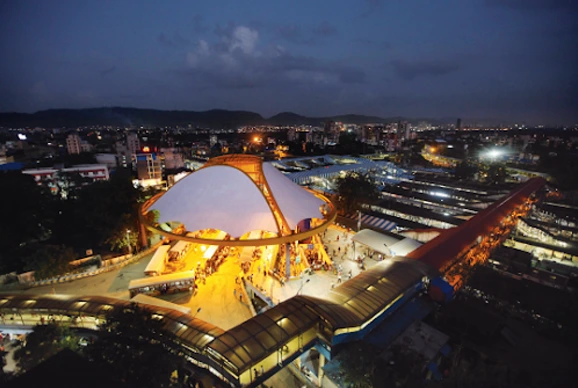
His tenure as Municipal Commissioner of Thane marked a transformational phase for the city's infrastructure and urban mobility. He led major road widening projects, reclaiming 100 hectares of encroached land to expand key roads such as Pokhran Road, Kalwa Road, and Station Road, significantly improving traffic flow and connectivity. Spearheading Thane’s metro master plan, he planned pod transit systems to enhance last-mile connectivity. Additionally, he conceptualized and secured approval for Inland Water Transport (IWT) projects, linking Thane with Kalyan, Bhiwandi, and Mira Bhayandar, further strengthening the city's transport network. His focus remained on sustainable urban development, mobility solutions, and efficient infrastructure planning.
Urban Infrastructure Development
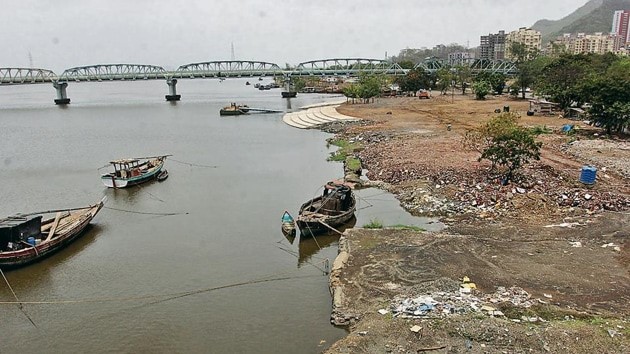
Waterfront Development
As part of his commitment to urban revitalization, he led the transformation of neglected urban spaces into vibrant public landmarks, enhancing recreational and environmental value. Key projects under this initiative included the Gaimukh Waterfront Development Project, Kalwa Waterfront Development Project, and Kopri Waterfront Development Project. These developments not only enhanced aesthetics and public access but also promoted sustainable urban planning, making Thane a model for waterfront regeneration.
Environmental Sustainability
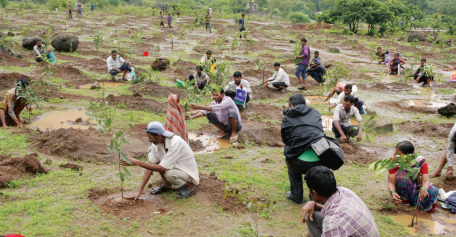
Doubling Green Cover
During his tenure, Thane experienced significant expansion of green spaces, reinforcing the city's commitment to environmental sustainability. As part of a large-scale afforestation drive, we planted over 5 lakh trees were planted, creating urban forests and public parks. Notable initiatives included the Miyawaki Urban Forest and the development of Southern Park, Northern Park, City Park, and Traffic Park. These efforts not only enhanced biodiversity but also improved air quality and urban livability, making Thane a greener and healthier city.
Environmental Sustainability
Water Body Restoration
As part of his commitment to sustainable urban development, he led efforts to revive historic water bodies, including Jogila Lake. These restorations improved water storage capacity, strengthened ecological balance, and enhanced urban resilience against water scarcity. By integrating environmental conservation with urban planning, these initiatives played a crucial role in preserving natural resources for future generations.
Environmental Sustainability
Renewable Energy Initiatives
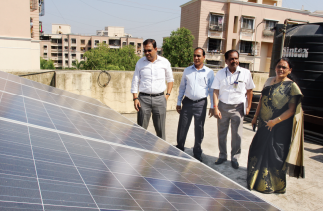
He prioritized sustainable energy solutions by installing solar-powered street lights and electric poles, reducing reliance on conventional energy sources. Additionally, he led the underground transition of overhead transmission lines, enhancing safety, reliability, and city aesthetics. These initiatives reinforced Thane’s commitment to clean energy and urban sustainability.
Social Welfare and Public Programs
Signal and Platform Schools
To ensure education for marginalized children, he launched innovative schooling programs:
Signal Schools: Converted shipping containers at traffic signals into classrooms for street children.
Platform Schools: Established schools on railway platforms to rehabilitate child laborers and provide access to formal education.
Women Empowerment.
Promoting inclusivity in sports, he led the development of dedicated football stadiums for Muslim women in Mumbra, creating safe spaces for recreation and empowerment.
Rural Development and Water Conservation
Ganga Sagar Abhiyan in Nasik
As CEO of Nashik Zila Parishad, he launched the Ganga Sagar Abhiyan, a participatory water conservation initiative aimed at enhancing water availability and sustainability. The campaign focused on desilting village tanks, repairing KT Weirs, and constructing percolation and storage tanks to improve groundwater recharge. By promoting soil conservation and runoff control, we optimized water storage and usage, ensuring long-term benefits for agriculture and local communities. The initiative became a benchmark for public-private collaboration in environmental governance, demonstrating how administrative leadership and community participation can effectively address critical resource challenges.
Rural Development and Water Conservation
Tadoba-Andhari Tiger Reserve Rehabilitation
As Collector of Chandrapur, he led the relocation of Botazari and Kolsa villages to a newly developed settlement, Tolewahi (Mul Tehsil), ensuring a smoother transition and improved living standards for displaced communities. The relocation provided modern infrastructure, surpassing the quality of neighboring villages, and earned community recognition, with one wadi named "Sanjeev Wadi" in his honor. The newly established village, Tolewahi, became a model for sustainable rehabilitation in conservation areas, balancing wildlife protection and human settlement needs.

Smart City and Digital Innovations
Digi-Thane Smart City Initiative
He introduced Digi-Thane, a pioneering G2C (Government to Citizen), B2C (Business to Citizen), and C2C (Citizen to Citizen) communication platform, revolutionizing urban governance and service delivery. This initiative facilitated faceless interactions for essential services like property tax payments and utility bill submissions, enhancing efficiency and transparency.
Recognized nationally and internationally, Digithane set a benchmark for innovative citizen engagement and smart city governance.